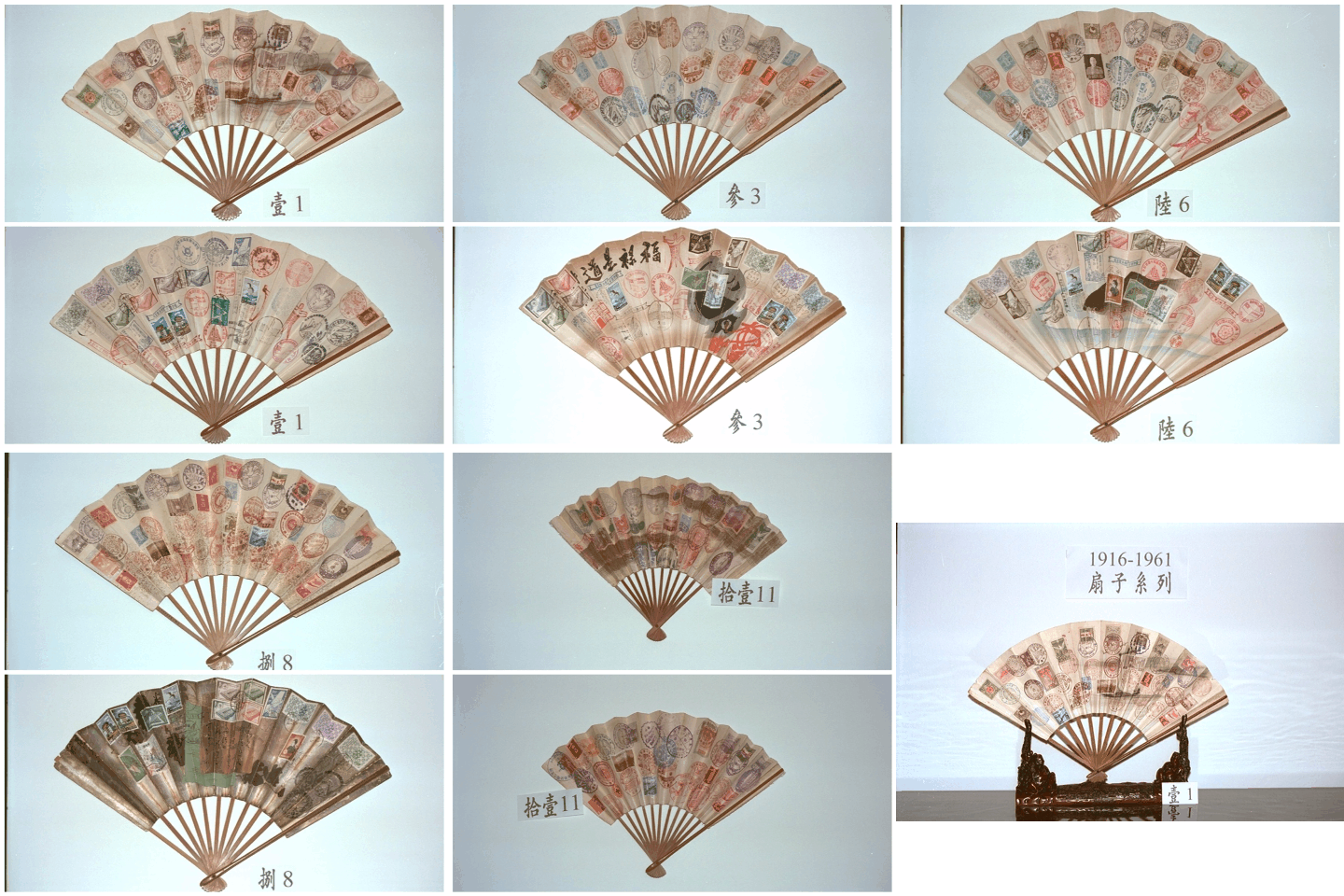
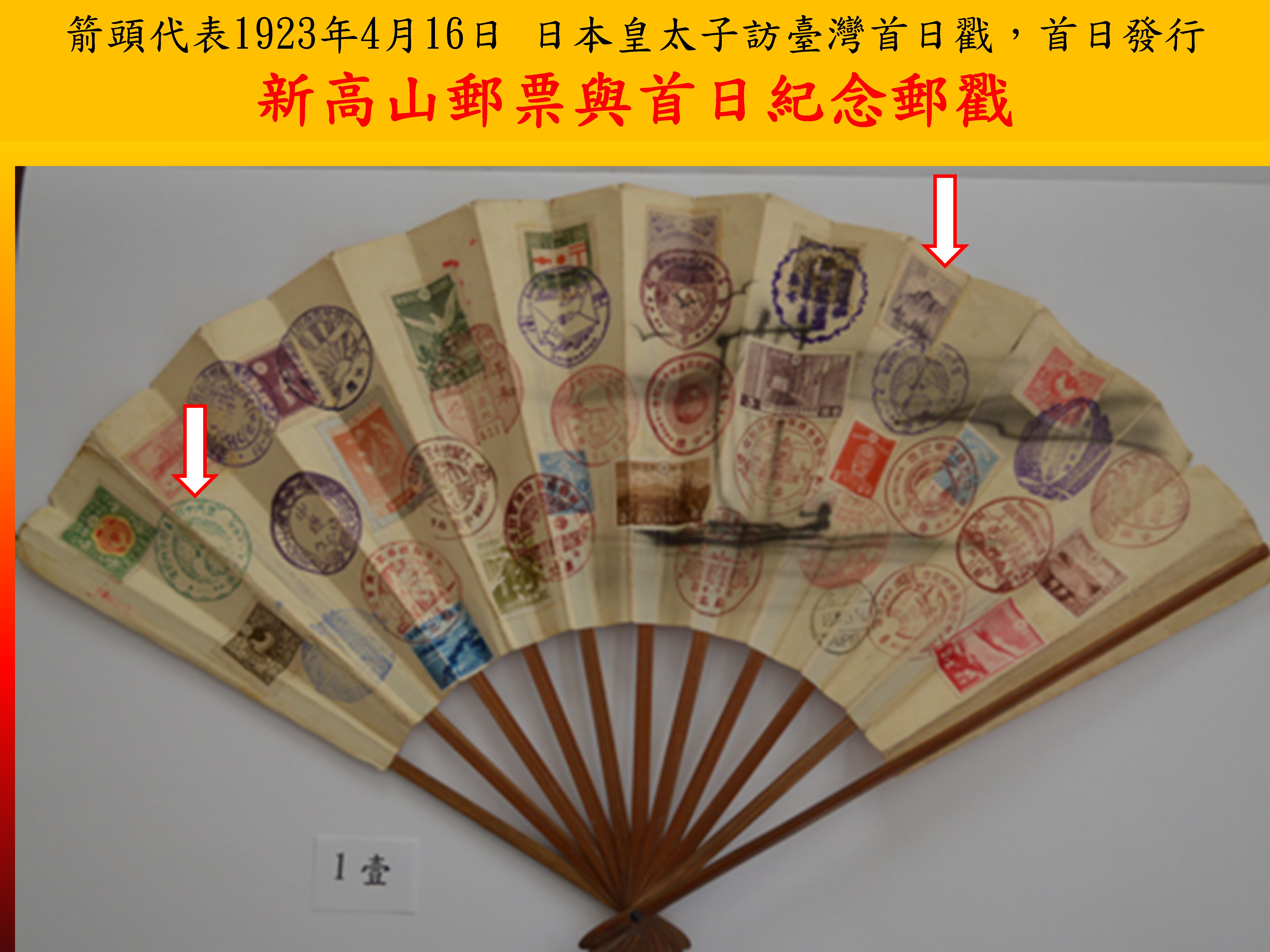
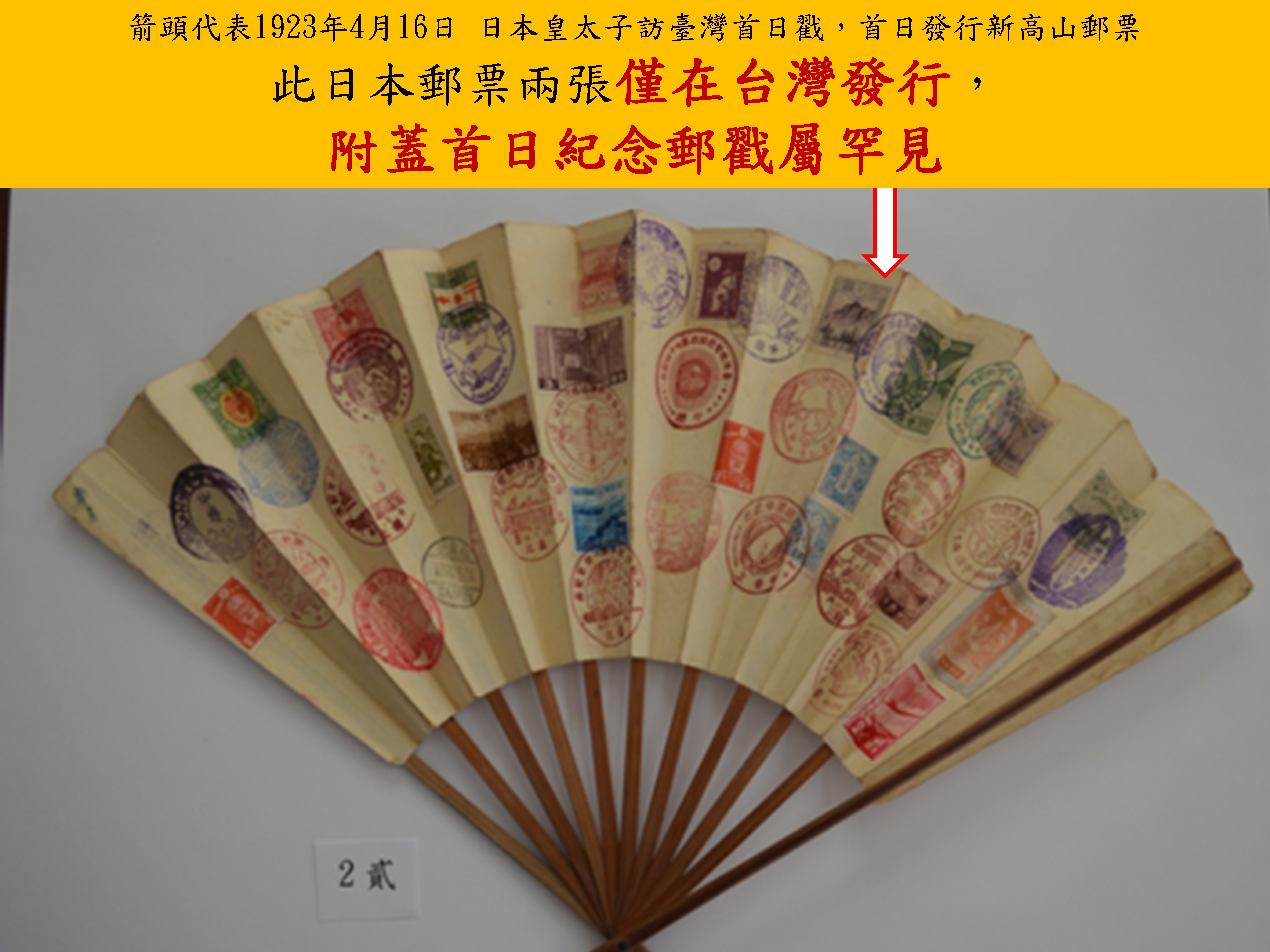
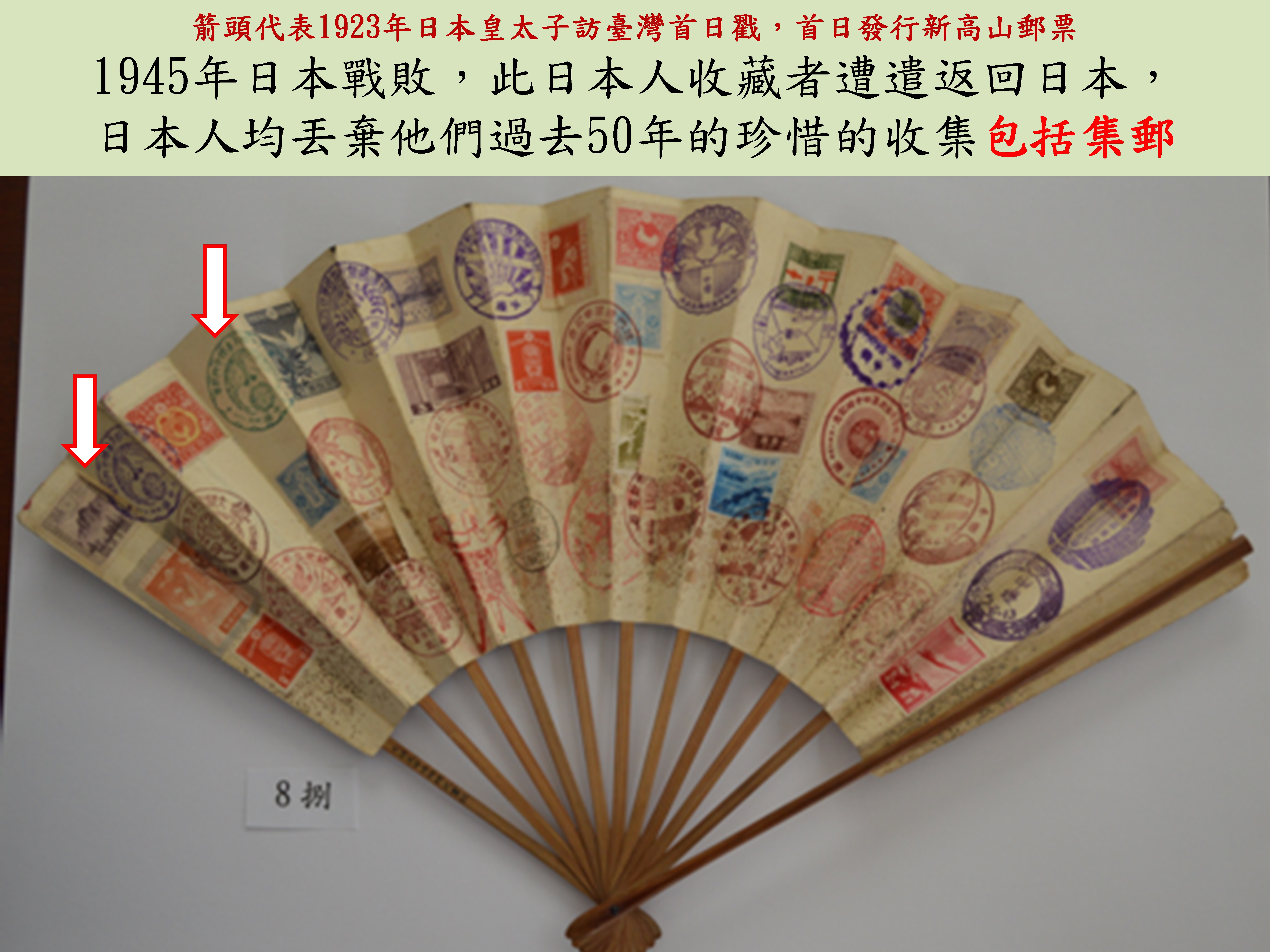
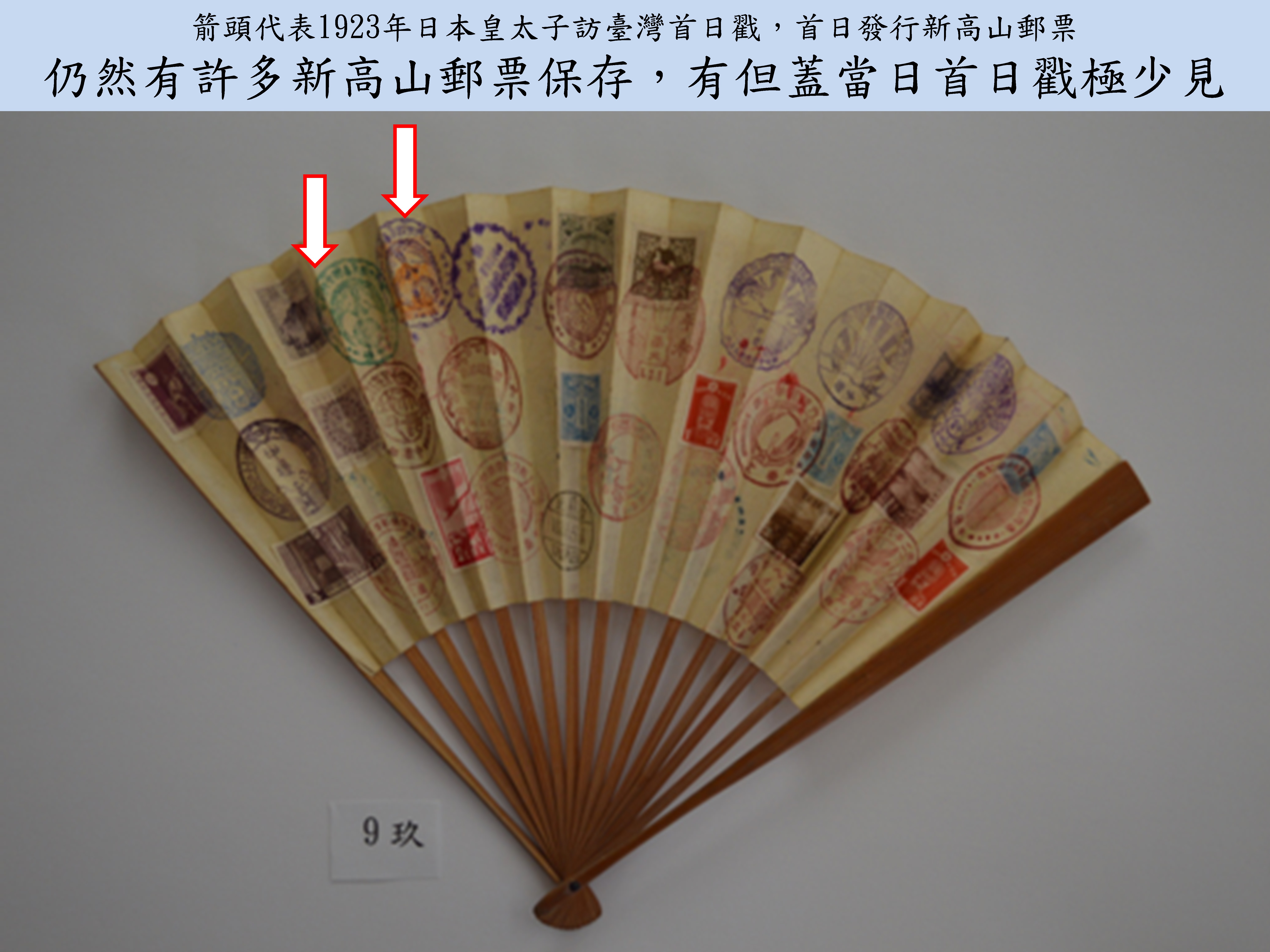
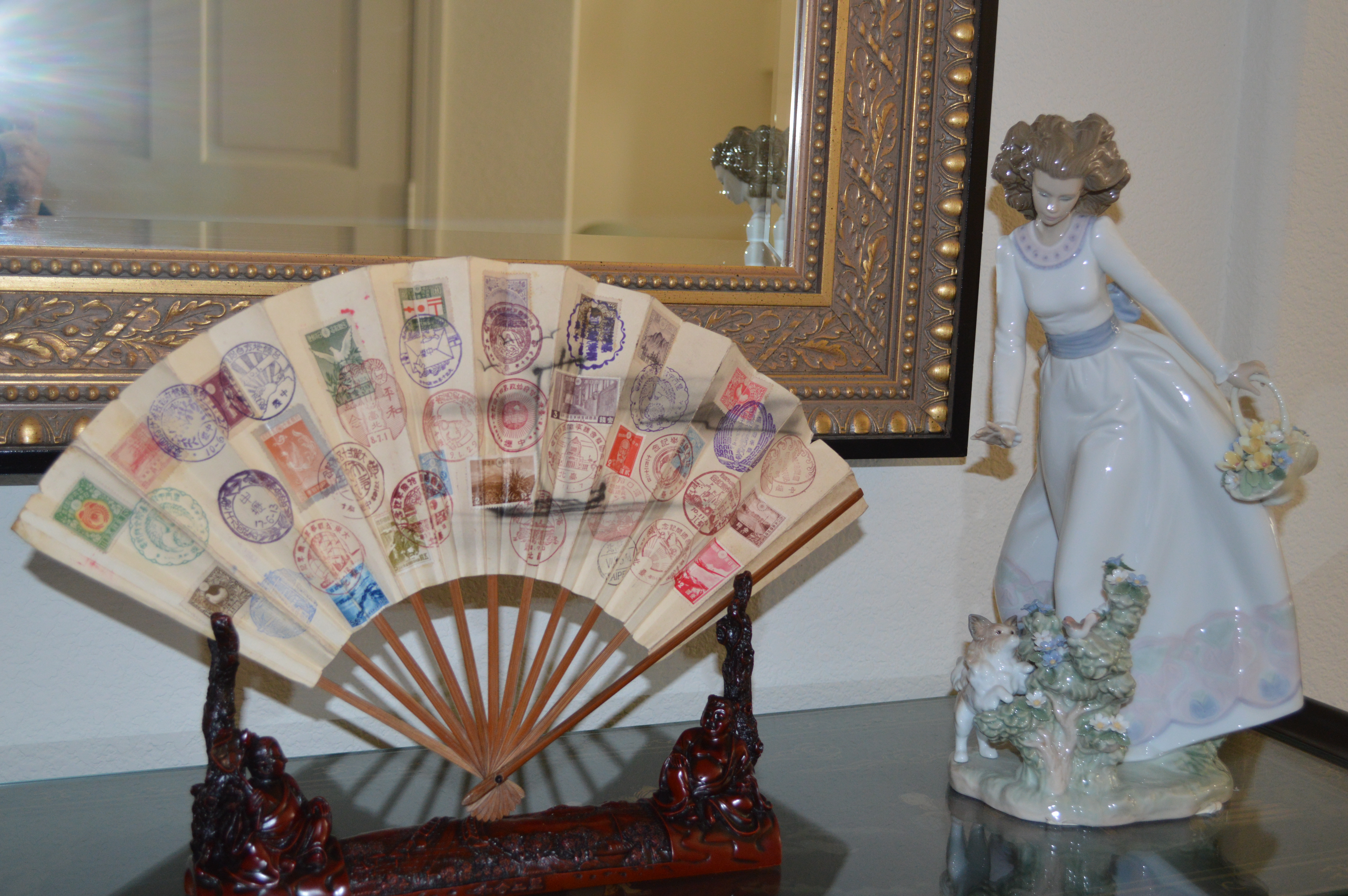
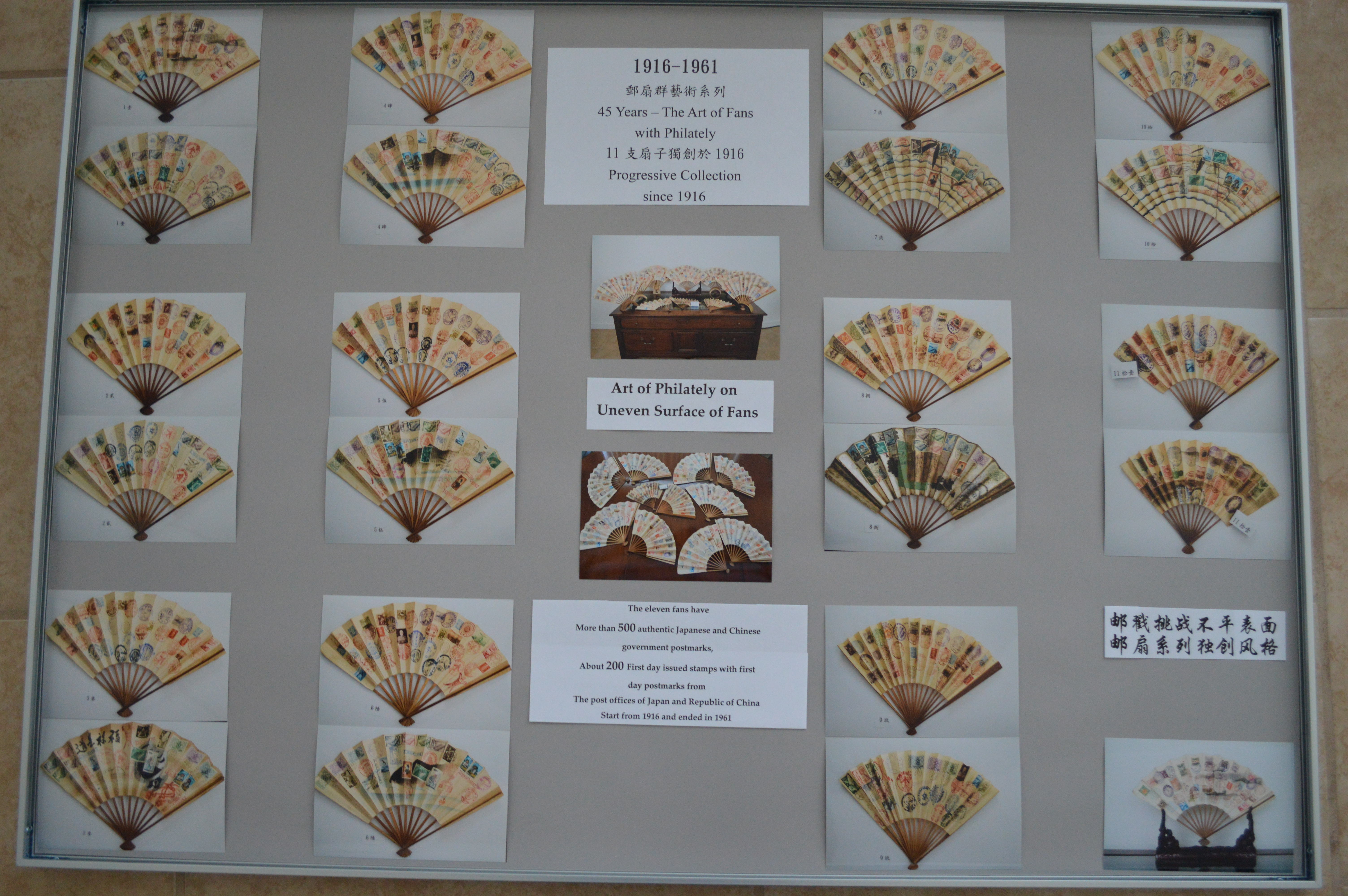
集藝術、歷史於十一扇的收集:1916-1961
In Taiwan, in the early 1900s, my maternal
grandmother, Mrs.
Tzo-Mei-Ho, through the
influence of her neighbor in the city of
Chureki (now Chung-Lee),
started to collect stamps. She continued
her collecting when, later, she moved to Taihoku (now Taipei, the
capital of the Republic of China).1
二十世紀的初期,我外婆林曹美好經由她住在中壢市鄰居的影響,
開始收集郵票。之後,她搬到台北後仍繼續這項收集。
My grandmother
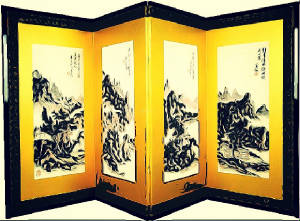
invented a unique variation on an existing
stamp collecting method. Around 1840, British women started
the
practice of sticking stamps on objects, in their case on
windows
and porcelain ware. My grandmother, who, like
most women in
Taiwan at that time, carried a fan wherever she went, used
her
fan as the collection medium.
我的外婆發明了一種獨特的集郵方式。約1840年時,英國婦女開始了
將郵戳附印在實物上的習慣,她們是將郵戳蓋在窗戶和陶磁器上。和當時
台灣大多數女人一樣,我的外婆總是隨身攜帶著一把扇子,並用它做為集
郵的媒介。
One day in 1916, when she went
to the post office in
Chureki, she asked the
clerk to place her newly purchased stamp
on her fan. From then on, in her trips to the post office,
she
regularly added to the fan collection in the same way.
Sometimes
she would take two or more fans with her to have them
stamped.
After my father, Charles Chen, who was
educated in British
Christian school in Amoy, Fukian Province, China, married
her
daughter, my grandmother discovered that he had been
collecting
stamps since he was a boy. She then entrusted him to continue
her
collection by bringing fans to the post-office any time there was
a First Day Issued Postmark or a Special Occasion Postmark.
Even
though my father had his own method of collecting-placing
stamps
and postmarks on large pieces of folded paper-he
realized the
uniqueness of the fan collection. Thus he willingly fulfilled
my
grandmother's trust. Every time his took his big, folded
papers
to the post office, he took one or more fans as well.
(I plan
some day to write an account of my father's own collection.)
1916年的某日,她前住中壢的郵局,要求經辦員將郵戳蓋在她新買的扇
子上。自那時起,在她去郵局時,總循著舊例添上幾枚新扇戳。有時,她
會拿兩把或更多的扇子去蓋戳。在我父親-陳時中(在中國福建Amoy受英
式教育),娶了她女兒之後,我外婆發現我父親自小即已開始集郵。她因
此將集戳的興趣委託與我父親,讓他繼續這項集扇戳的衣缽-每當有首日
戳或紀念戳啟用的日子,便帶著扇子到郵局蓋戳。即使我父親有他自己一
本放置集郵品和郵戳的大型檔案夾,他也明白扇戳集郵的獨特性。因此,
他也滿心樂意地去完成我外婆的委託。每次他帶著他的袋子、摺頁紙到郵
局時也會帶一把或以上的扇子同往。(我打算改天為我父親的收集開個專
欄。)
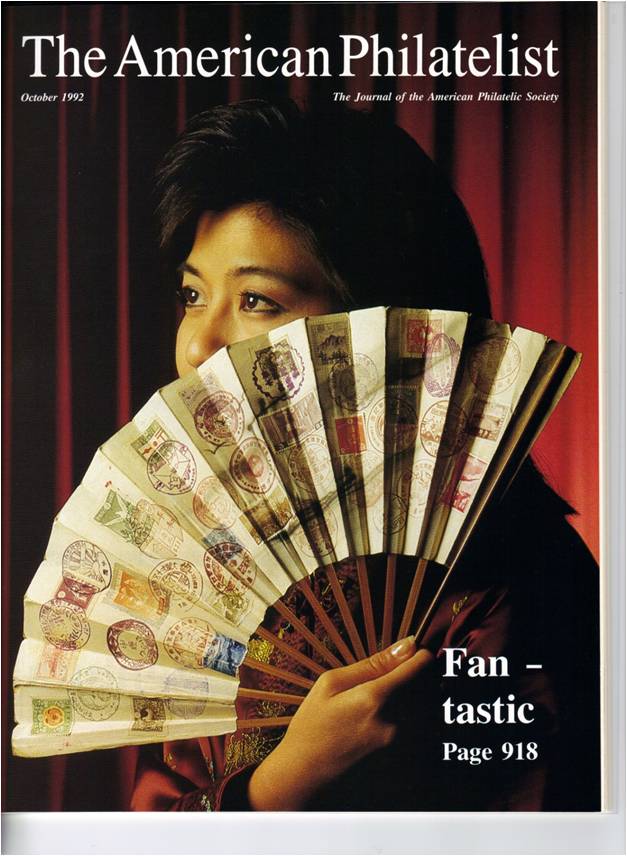
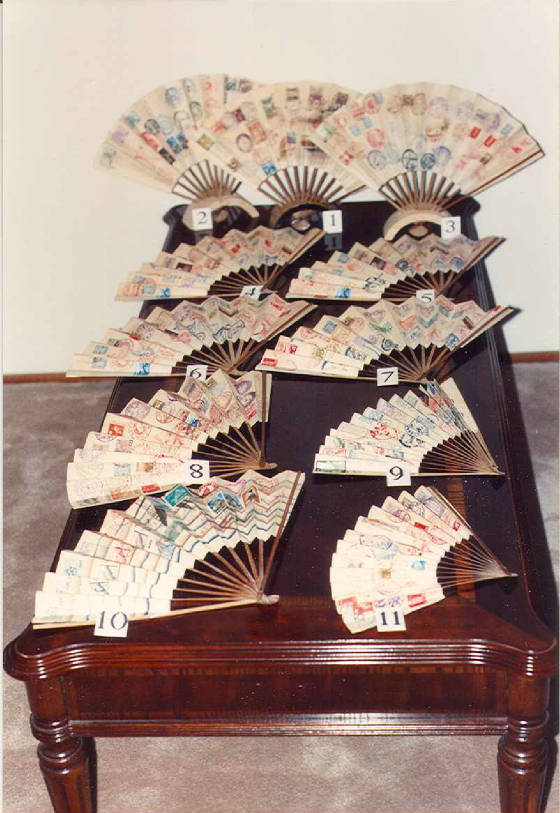
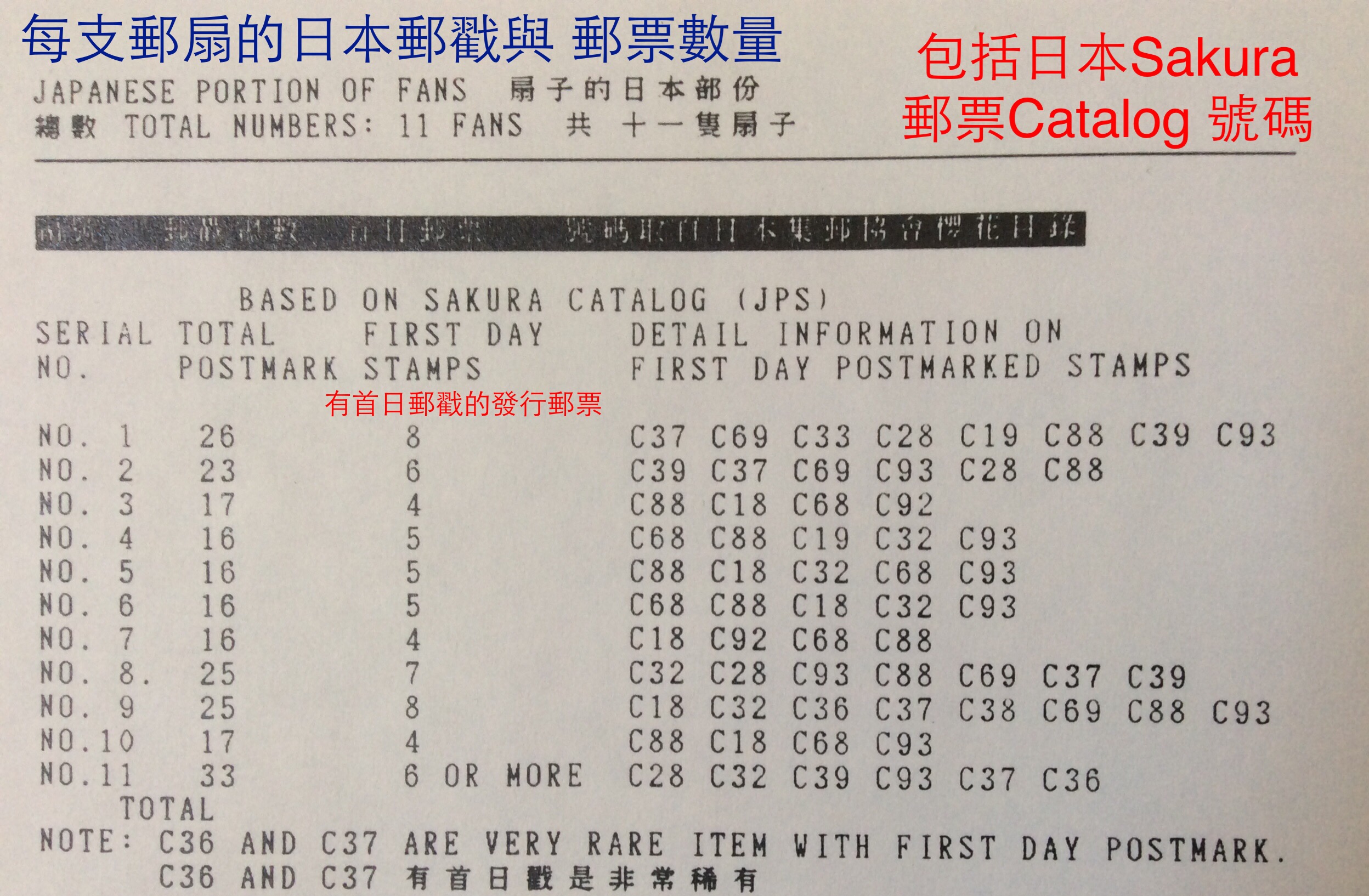
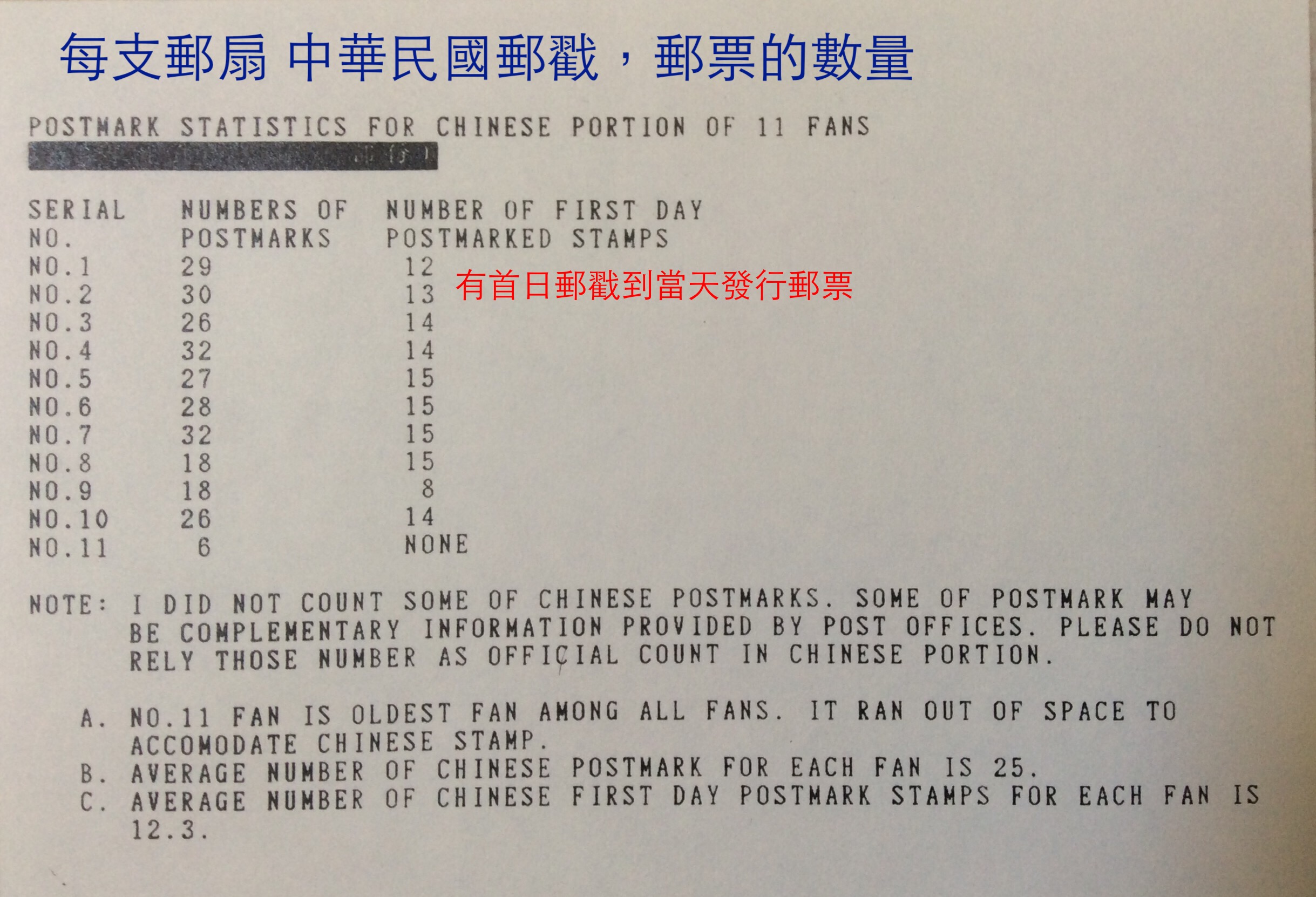
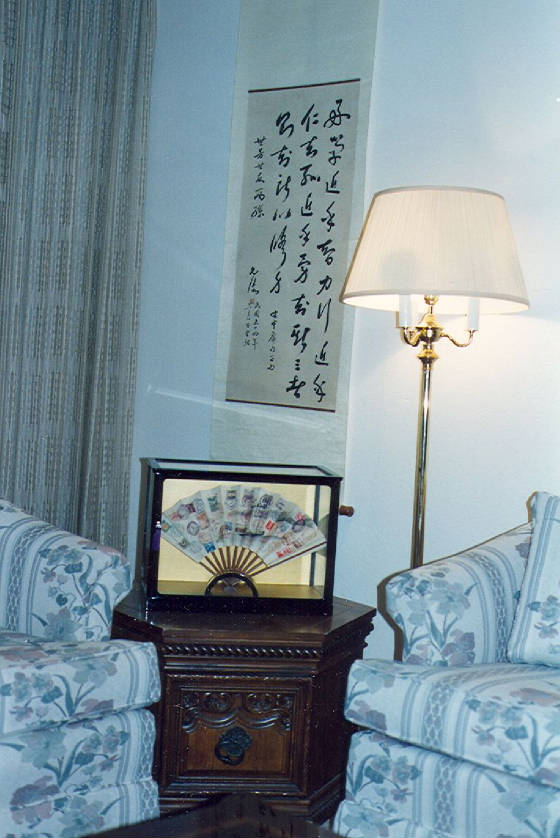
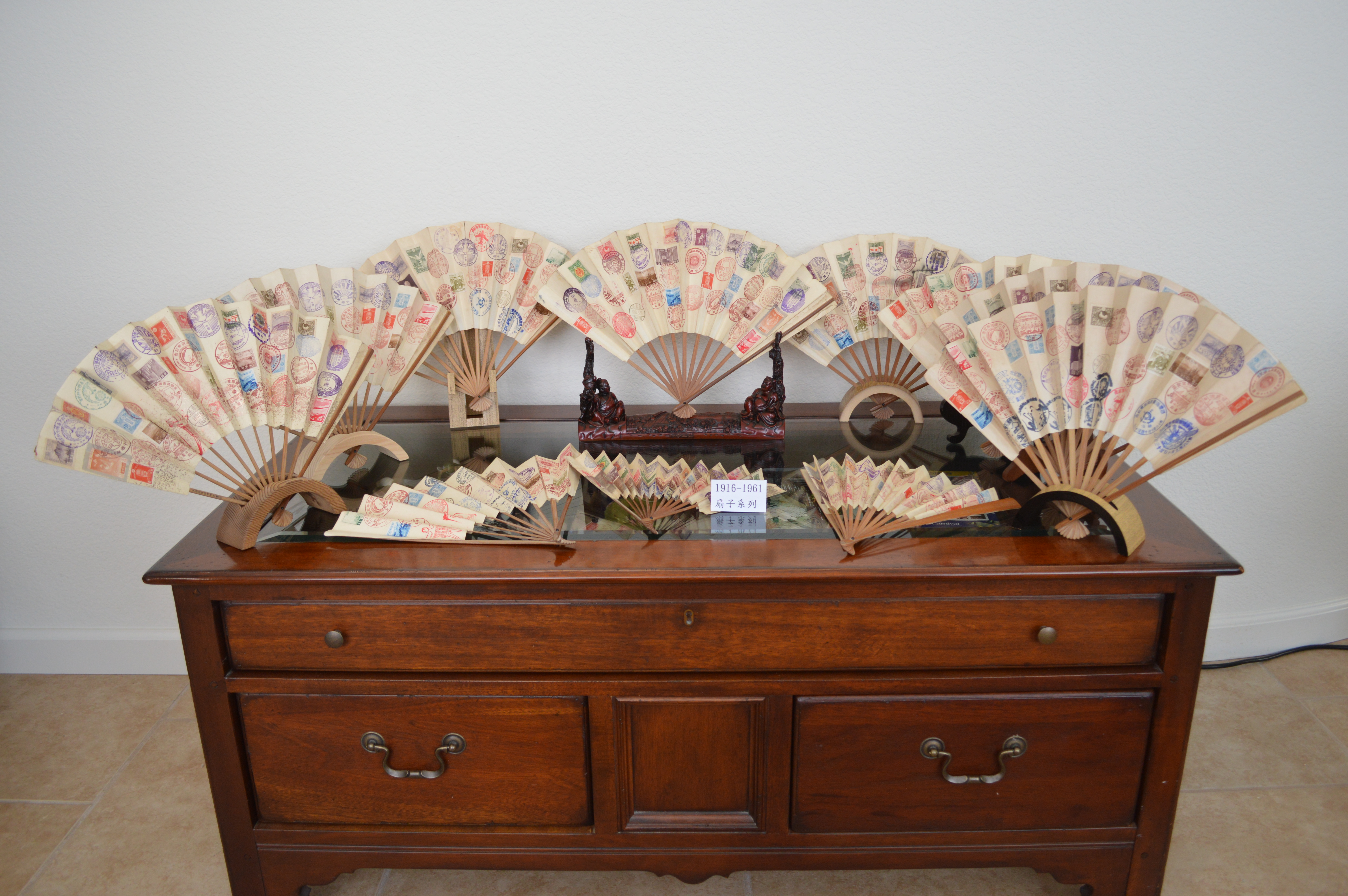
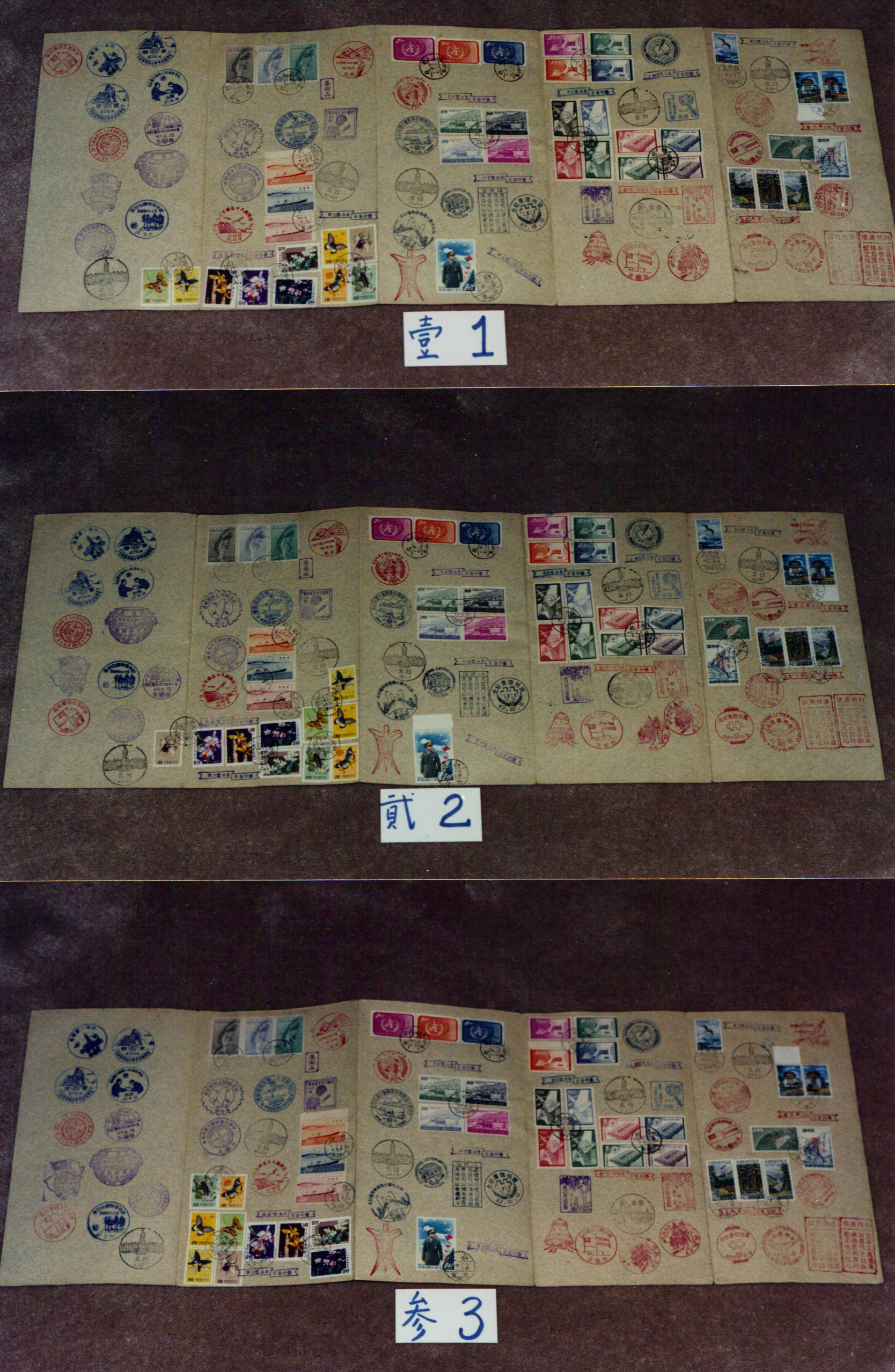
Altogether, the final
collection, created between 1916 and
1961, spreads across 11 fans, typically covered
with Chinese
stamps and postmarks on one side and
Japanese stamps and
postmarks on the other.2 The authenticity of the collection
is
beyond doubt and can easily be
verified. The stamps and
postmarks-many of them first day or commemorative items-are
very
legible.
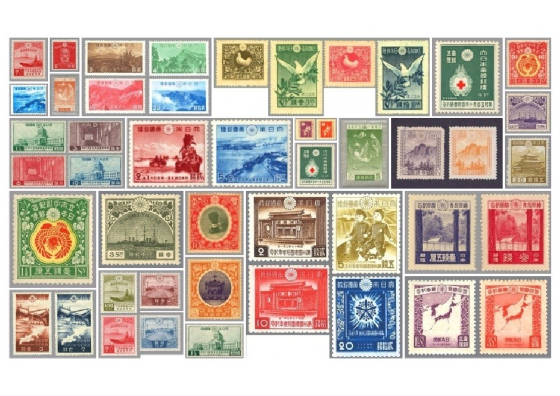
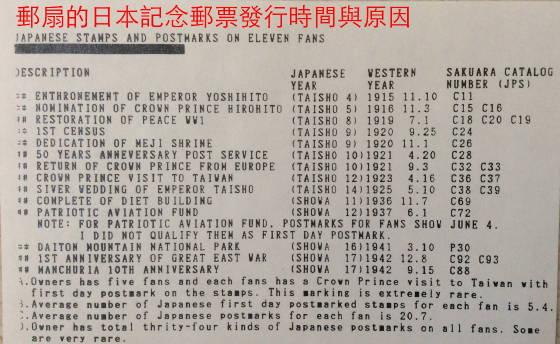
總之,這最後的收集,大約是在1916年至1961年間所集成的郵戳已蓋
印在十一把扇子,第一面是中國郵票和郵戳,另一面則是日本郵票和郵戳
。此項收集的真實性是不容置疑地,而且也能輕而易舉地鑑證。多數首日
或紀念的郵票和郵戳是深具可信度的。
In their searches,
typical collectors of fans look for fans
of extraordinary craftsmanship or fans associated
with major
personages or cultural events. For example, one can find today
in
certain Asian museums, such as the Palace Museum
in Taiwan,
collections of fans used by famous poets and painters. Such
fans
represent a highly significant expression of art, literature, and
history in a single object.
在他們的搜尋中,典型的集扇戳尋找特別的手藝品或是與風土民情相
關的作品。例如,我們可在特定的亞洲博物館中,像台灣的故宮,找到那
些曾被詩人或畫家所用過的扇子。這類的扇子呈現了高度之藝術、文學、
與歷史的表彰集於一物上。
In contrast, a
single-minded collection of stamps on an
ordinary woman's fan-who would think that this odd or
unusual
philatelic act could have produced much lasting value?
相反地,出自一名尋常的集扇女子她鍾情的集郵方式,可曾想過她這
種奇特的集郵活動居然能營造出此等歷史延綿的價值?
Started
76 years ago, these fans reveal not only
the
faithfulness of the two collectors; they reveal themselves as
a
manifest rarity in the expression of history, art, and philately.
自76年前起,這些扇子透露地不止是這兩個集郵者的成就感,也在在
顯示它們在歷史、藝術和集郵上的罕有。
Possessing
the spirit of long-term philately, these two
dedicated collectors-Mrs. Tzo-Mei-Ho and her son-on-law,
Charles
Chen-between the years 1916 and 1961-compressed
considerable
history on a single fan. Collectively, the 11 fans are
multi-
paned windows looking out on Japanese and Chinese
history in
those years, leading the viewer through a colorful gallery of
the
past. In particular, the many commemorative issues on
the fan
reflect events of the day.
擁有不懈毅力的集郵精神,這兩位熱心的集郵者-林曹美好和她女婿
陳時中,在1916年至1961年間,將可觀的歷史濃縮於一把扇子上。這11把
扇子可說是日本與中國在當時那幾年的歷史之窗,觀眾藉由這彩色藝廊的
引導穿越過去。值得一提的,在扇子上的諸多紀念主題反映了當日的情景。
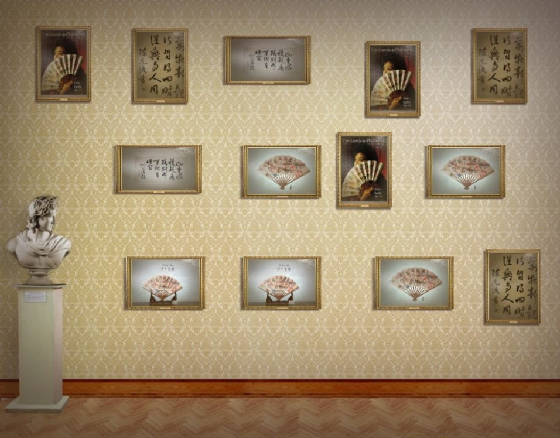
Indeed, as art, each fan resembles a
miniature painting.
Even before they became collection repositories, some of the fans
were of beautiful design. And then, with the overlaying of stamps
and postmarks, they became, and remain, exhibition galleries on
a
small scale. An array of fans became
arrays of galleries.
Showcase and collection in one, they are important
symbols of
oriental culture, expressing both historical and artistic truth.
說真的,就藝術來說,每把扇子就像一幅畫的縮影。即使在從前,它
們成了庫存貨,有的還是很美麗。之後,因為郵票和郵戳的加附,它們變
成小量的展覽品並且得以保存。一場扇子展遂變為一藝廊展示場。展示與
收集二合一,它們是重要的東方文化表徵,同時兼具歷史和藝術信度。
As philately,
the fans are not only massive collection of
artifacts, of stamps and post marks issued over a 45-year period.
Some of fans even hold philatelic rarities.3
就集郵而言,扇子不止是45年間的手工藝品、郵票和郵戳的大量收集
,這當中有的甚至握有集郵界中的珍品。
The fans
thus contain multiple riches. Viewers can enjoy
history and art, as well as a philatelic
collection, in a
veritable museum without walls. an album without
covers. In
giving us these different perspectives, the fans turn out be,
not
simple, but complex cultural objects. In addition, perhaps
the
most precious value to Japanese people and Chinese people will
be
the events and people these fans recall to memory,
especially
memories of life in Taiwan in an earlier period. For this reason,
if none other, viewers will not tire of looking at the fans. The
fans' ultimate value is this refreshment of spirit.
這些扇子因此而飽含著大量的財富。觀眾可在一座無牆的美術館、無封
面的相本中同時悠游於歷史與藝術,還有集郵。在提出了這些不同的見解下
,這些扇子褪去簡單的外衣一轉為複雜的文化客體。除此之外,也許對日本
人和中國人而言,最珍貴的價值是它們喚去人民對過去的記憶,特別是那段
早期的台灣生活回憶。如果沒有其他的因素,光這個理由,觀賞者將不會對
這些扇子產生厭怠感。欣賞扇子的最終價值即在於洗滌心靈上的疲累。
They also will be viewed as a testimonial to
the patient,
continuous collecting activity of the two collectors. This philos
or love is, we know, the primary philatelic
virtue, one not
easily sustained.
它們也將被視為對於兩個有耐心、有恆心致力於此項活動的收集者的
見證。這份堅持的態度、愛,誠如我們所知的,是首要的集郵美德,不是
輕易可維持地。
_______________________________
1 The names of both Chureki 中壢and Taihoku 台北 appear in her
collection.
2 Taiwan was under Japanese control from 1896 to 1945.